

A generic CRM records the deal. Miyara runs the channel.
A CRM is an empty database with reminders around it. Your team finds, checks, quotes, and chases, then types the result in. Miyara does that work itself and brings you the deal already moving.
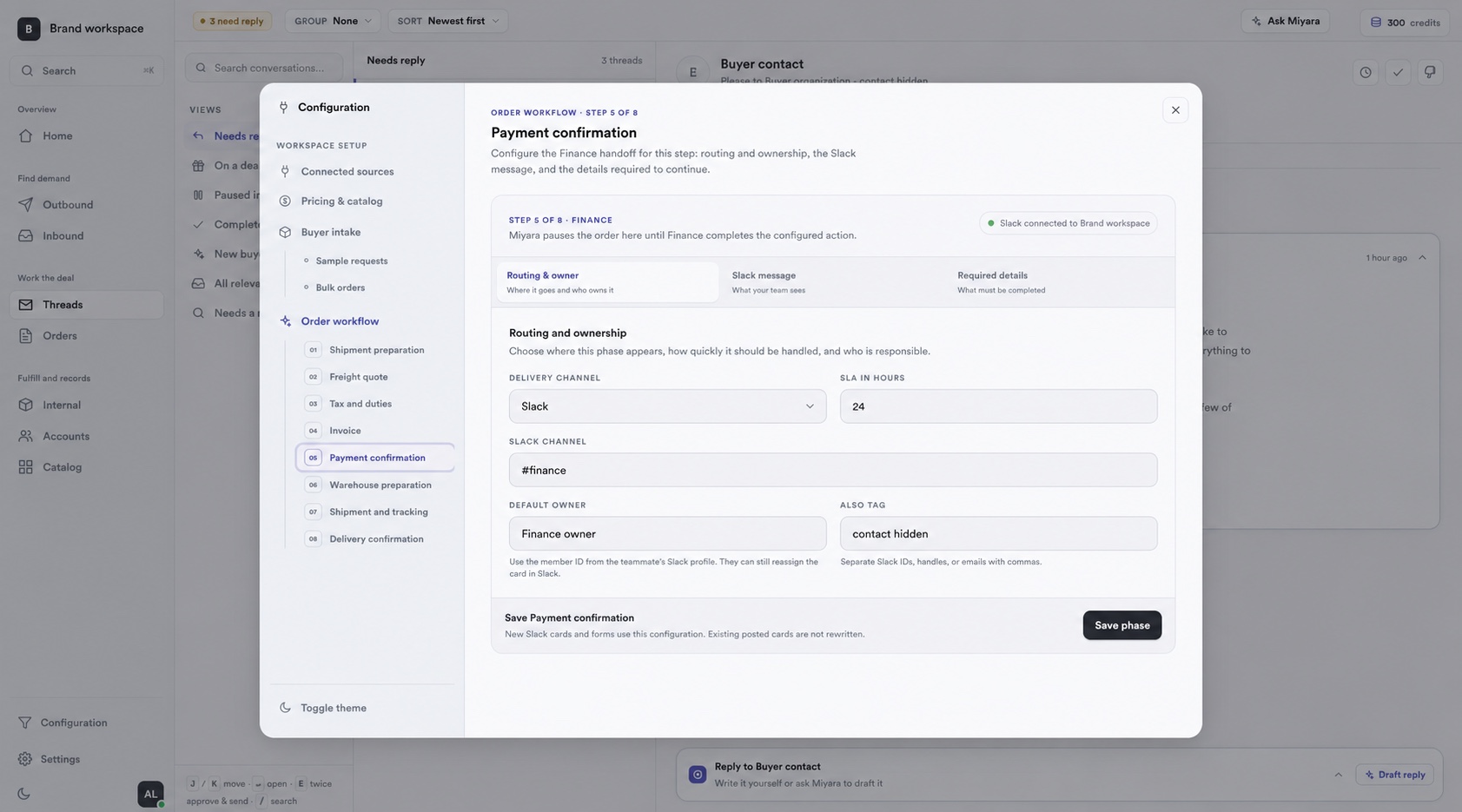
A CRM records. Miyara runs.
Everything below is work a bulk order needs. A CRM waits for your team to type it in.
Surfaces the buyer a CRM never sees.
A CRM hears about a deal when someone types it in. Miyara reads the inbox first and lifts the real orders above the noise.
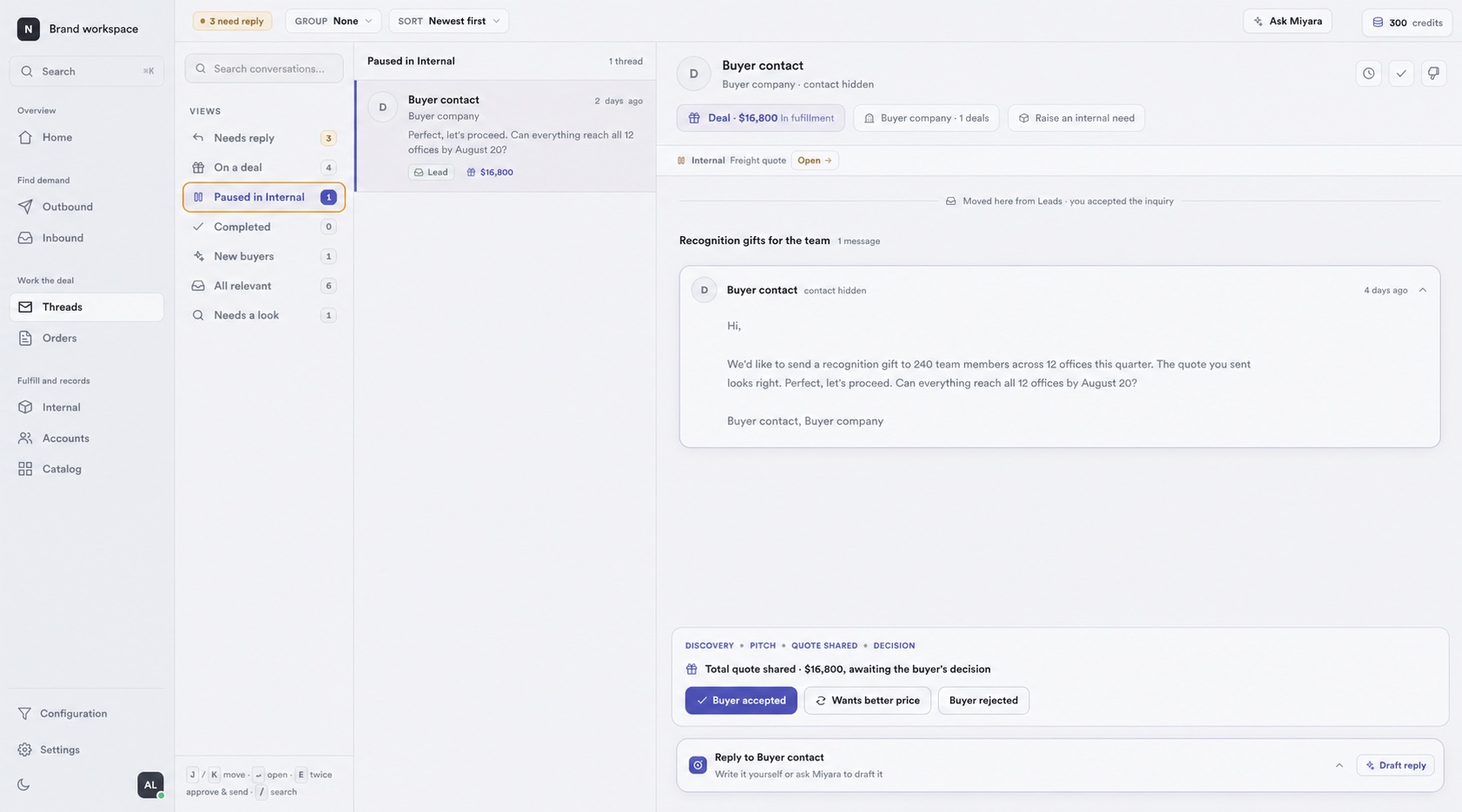
The reply, already drafted.
A CRM gives you a blank note and a reminder. Miyara gives you the reply, written from your catalog at your prices. You read it and hit send.
Intelligence, not data entry.
Every buyer is checked live: real website, verified email, proof they buy in bulk. And before any cold email, Miyara looks in your network for someone who can introduce you. Cold email converts under 5%, even with a great list.
The order runs through your team, not around it.
A bulk order is a dozen steps, and each one waits on a person. A CRM leaves every handoff to a reminder. Miyara routes each step to its owner, puts a deadline on it, and chases. It never holds your money or your freight.
CRM or Miyara, answered plainly.
Is Miyara a CRM?
No. A CRM records the deal after your team does the work. Miyara does the work: checks the buyer, drafts the reply, clears the internal steps. Keep your CRM if you like; Miyara's records stay editable.
Can I just use my existing CRM for bulk orders?
You can keep it, but it won't do anything. A CRM records a deal you already found, quoted, and cleared. Miyara does those steps. The record is the output, not the input.
What does Miyara do that a sales CRM cannot?
It finds and checks buyers instead of storing them. It screens for brand safety. It looks for warm intros. And it runs the order itself, quote to proof of delivery. Every send is yours to approve.
How does Miyara tell a real buyer from a risky one?
Evidence, not keywords. Miyara has to find proof the org buys in bulk in your categories before the lead reaches you. A wrong-fit buyer gets flagged before you spend a week on them.
Who is Miyara built for?
Consumer brands that sell in bulk to organizations: a company gifting its people, a team outfitting its roster, a boutique stocking its shelves.
Run the channel. Don't just record it.
Miyara finds the buyers, drafts the replies, and clears the steps. It never holds your money or your freight.